

3,000 cycles versus 1,000. That’s roughly the gap between a well-managed LFP pack and an NMC pack running without proper oversight, based on 2026 cycle life benchmarks from Skyenergi’s battery longevity data. Chemistry matters, sure. What’s watching over that chemistry matters just as much. Maybe more.
A battery management system sits between raw lithium-ion cells and everything depending on them working safely. Voltage, current, temperature, state of charge, all of it monitored constantly by the battery management system in real time. Skip that oversight on anything bigger than a handful of cells and you’re basically flying blind.
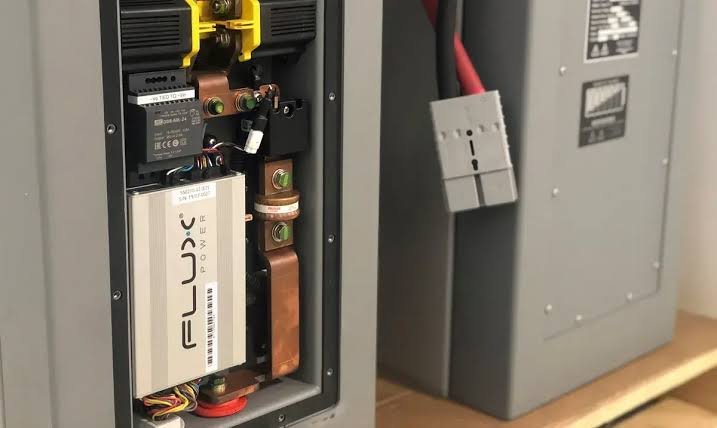
What a BMS Actually Does, Beyond the Marketing Language
Three jobs, more or less. Protect the cells from conditions that would damage them. Balance charge so the weakest cell in the pack doesn’t drag everything else down. Report back, continuously, on how healthy the battery actually is.
That third job gets underrated constantly. Overcharge protection on NMC chemistry typically kicks in around 4.25 volts per cell, a number most spec sheets treat as gospel. But a competent BMS isn’t only watching voltage in isolation. It’s calculating whether temperature, internal resistance, and current density are combining in a way that pushes a cell toward lithium plating. Voltage monitoring alone would miss that entirely.
Miss it once, at scale, and there’s no warning shot. You get a fire.
Balancing is the quieter half of the job, but no less necessary. Cells in a series string never leave the factory perfectly matched. Small differences in internal resistance and capacity compound over hundreds of cycles, until one cell hits its voltage ceiling well before the rest do. A BMS redistributes charge, or bleeds it off passively, keeping the whole string aging at roughly the same pace. Skip that, and the weakest cell caps what the entire pack can deliver. Doesn’t matter how strong the others are.
Cycle Life Is Where the Real Payoff Shows Up
Here’s the number that actually matters: 80 percent. Once a cell’s capacity falls to that level, industry standard calls it done, regardless of how many charge cycles it took to get there. IEC 61960-3 formalizes that threshold, and it’s the benchmark used across EVs, stationary storage, and off-grid systems alike.
Depth of discharge is the single largest controllable variable in how fast a pack ages, and it isn’t close. A cell cycled between 20 and 80 percent state of charge lasts dramatically longer than one routinely runs to full and back to empty. This is exactly the kind of behaviour a BMS enforces on its own. The end user never has to think about it.
Under moderate conditions, LFP cells reach 3,000 to 6,000 cycles before hitting that threshold. NMC gets picked for energy density instead, but tops out lower, usually 1,000 to 2,000. LTO sits at the far end, sometimes past 10,000 cycles, though you pay for it with lower energy density and a steeper cost per kilowatt-hour. None of these figures mean much in isolation. They only hold up when a management system is actually enforcing the charge windows and thermal limits each chemistry needs.
Predictive Health Monitoring Is Where This Is Headed
Newer BMS designs are moving past simple threshold monitoring into predictive territory. Why does that matter? Research published in Scientific Reports demonstrated that machine learning models, LSTM architectures specifically, can forecast a lithium battery’s remaining useful life from historical state-of-health data with meaningful accuracy.
A predictive BMS doesn’t wait around for a cell to already be degrading before doing something about it. It flags the trend early, early enough to shift charging behavior or schedule maintenance before the capacity loss becomes irreversible. For a fleet operator running hundreds of packs, that’s the difference between a replacement you saw coming and a truck stranded mid-route.
Reading about this architecture only gets you so far, honestly. Working with an actual battery management system learn-and-build platform is where cell balancing, thermal cutoffs, and state-of-charge estimation start to click, in a way slides never quite manage.
Chemistry Choice Doesn’t Replace Good Management
LFP for longevity. NMC for energy density. LTO for extreme cycle counts. That’s the usual pitch, and it’s tempting to treat chemistry as the whole story. It isn’t wrong exactly. It just skips the part where none of these chemistries hit their spec numbers without a battery management system doing its job continuously in the background.
Manufacturing tolerances have tightened industry-wide through 2026. Electrolyte formulations keep improving cycle life at the cell level too. Good. None of that helps a pack where one weak cell in a series string drags the rest down through imbalanced charging, or where thermal management lags behind during a fast-charging session on a hot afternoon.
The BMS is what turns a chemistry’s theoretical cycle life into something a pack actually achieves out in the field.
Cold charging is the one people tend to forget about. Drop a lithium-ion cell below freezing and try to charge it, and you risk lithium plating on the anode. That damage doesn’t reverse. No amount of careful cycling afterward brings the capacity back. Heat causes a different problem: push past roughly 45°C and electrolyte breakdown speeds up instead. A BMS with real thermal cutoffs simply refuses both extremes, throttling or halting charge current until things settle back into a safe range.
Not glamorous, any of this. But that one guardrail probably saves more real-world lifespan than whatever cathode chemistry breakthrough shows up next.