Is Specialized Career Training Really Difficult? Setting Realistic Expectations for Vocational Students

One of the most common questions prospective vocational students ask is whether their chosen program will be too challenging. This concern often stems from misconceptions about specialized training and fear of academic failure. Understanding what “difficult” actually means in career education contexts helps students set realistic expectations and prepare effectively.
Redefining Educational Difficulty
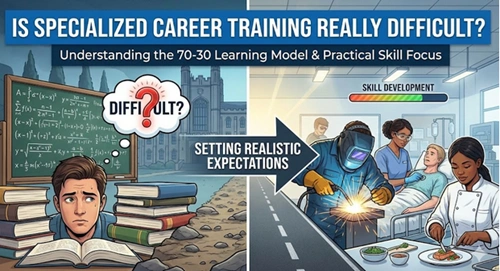
Traditional academic difficulty—measured by complex theoretical concepts and standardized testing—differs significantly from vocational training challenges. Career-focused programs emphasize:
- Practical skill development through repetition
- Application of techniques rather than theory memorization
- Client interaction and professional communication
- Time management and multi-tasking abilities
- Consistent attendance and practice dedication
The 70-30 Learning Model
Most specialized training programs follow a hands-on learning model where approximately 70% of training involves practical application and 30% covers theoretical foundations. This inverted approach compared to traditional education means students spend most of their time actually doing the work they’ll perform in their careers.
The theoretical component covers essential knowledge—safety protocols, sanitation standards, anatomy basics, chemistry fundamentals, and state regulations. While this requires study and memorization, it’s targeted and directly applicable rather than abstract.
Common Student Challenges
Students in vocational programs typically encounter these challenges:
Physical Stamina: Many specialized careers require standing for 6-8 hours daily, requiring physical endurance that develops over time.
Precision and Consistency: Developing muscle memory and consistent technique takes practice. Initial frustration with skill acquisition is normal and temporary.
Time Management: Balancing program requirements with personal responsibilities demands organizational skills. Students who attend classes regularly and stay on schedule typically succeed.
Client Interaction: Working with real clients can be intimidating initially. Communication skills improve with experience and proper supervision.
Business Understanding: Learning to manage appointments, handle payments, and understand industry business practices adds complexity beyond technical skills.
Success Rates and Statistics
Data from specialized training programs reveals encouraging patterns. Programs with regular attendance requirements report pass rates of 80-90% for state licensing examinations. The key differentiator between successful and struggling students isn’t intelligence—it’s consistency and engagement.
Students who attend regularly, practice diligently, and actively participate in learning opportunities overwhelmingly succeed. Those who miss classes frequently or fail to invest time in skill development struggle regardless of academic aptitude.
Age and Career Change Considerations
An interesting aspect of vocational education is that student age doesn’t predict success. Programs see equal success rates across age groups from teenagers to mature adults changing careers. In fact, older students often excel due to greater maturity, life experience, and clarity about their career goals.
Career training programs accommodate various learning paces and backgrounds, recognizing that students enter with different skill levels and experiences.
Practical Preparation Strategies
Students can improve their training experience by:
- Researching program requirements and daily schedules beforehand
- Arranging childcare and transportation to ensure consistent attendance
- Setting realistic timelines for completion
- Connecting with current students or graduates for insights
- Understanding financial aid options to reduce stress
- Preparing physically for the demands of standing and repetitive motions
The Reality Check
Is specialized career training difficult? It requires dedication, consistent effort, and time investment. However, it’s not academically harder than traditional college programs—it’s just different. The learning style emphasizes practical application over theoretical knowledge.
For detailed insights into what specific programs actually entail, including realistic timelines and challenges, prospective students benefit from thorough research. Understanding what to actually expect during training helps eliminate unnecessary anxiety while promoting realistic preparation.
Final Thoughts
Success in vocational training depends more on work ethic, consistency, and genuine interest than on traditional academic ability. Students who show up, put in the effort, and maintain positive attitudes throughout their training almost always succeed. Those looking for shortcuts or minimal effort will struggle in any educational setting.
The question isn’t whether specialized training is hard—it’s whether you’re ready to commit to a structured learning process that will prepare you for a rewarding career. With proper expectations and dedication, most motivated students find career training challenging but entirely manageable.